





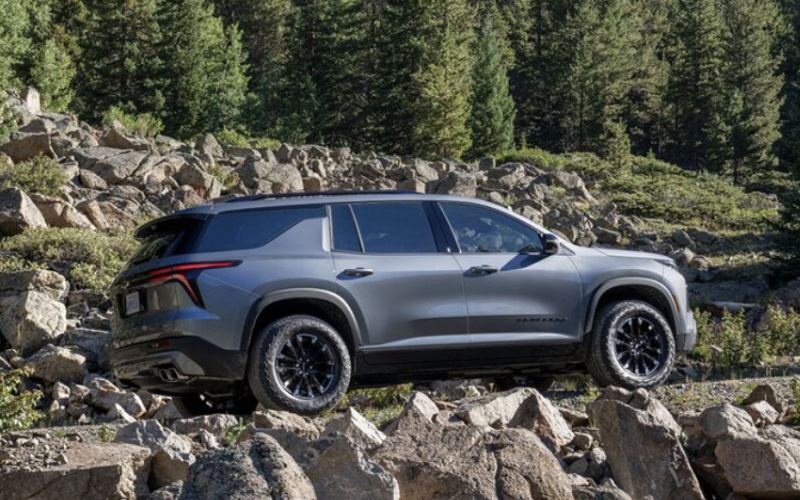
Jay Hatfield Chevrolet of Vinita – Better Hands-Free Driving Around Miami, OK – A Three-Row SUV Comparison of the 2026 Chevrolet Traverse and 2026 Honda Pilot
When families compare the latest three-row SUVs, one question comes up again and again: which model offers better hands-free driver assistance for long highway stretches and busy regional routes? If your search includes the Chevrolet and Honda mainstays, it quickly becomes a comparison between Super Cruise® in the Traverse and the Honda Sensing® toolkit in the Pilot. Both are advanced, but they are not the same. This deep dive explains how they differ and why hands-free can change your daily driving rhythm around Miami, OK, and beyond.
Super Cruise® is a hands-free driver assistance technology available on the 2026 Chevrolet Traverse that works on hundreds of thousands of miles of compatible roads across the U.S. and Canada. It pairs precision GPS, LiDAR-based map data, a driver attention system, and a network of cameras and sensors to keep you centered and moving with the flow. In High Country and RS, a 3-year OnStar One Super Cruise® plan is included, bringing connected services and seamless over-the-air updates to enhance the experience. The Honda Pilot, by contrast, features the Honda Sensing® suite—Collision Mitigation Braking System™ (CMBS™), Lane Keeping Assist System (LKAS), Adaptive Cruise Control with Low-Speed Follow, Road Departure Mitigation (RDM), and more. These are thoughtful, confidence-inspiring tools, but they require you to keep your hands on the wheel at all times. If truly hands-free capability on compatible roads is your goal, the Traverse is the only choice of the two.
What hands-free really changes day to day
Hands-free on compatible roads is not a party trick; it’s a quality-of-life upgrade that reduces fatigue on I-44, US-69, and the stretch between communities throughout Northeast Oklahoma. With Super Cruise®, the 2026 Traverse maintains lane position and following distance without constant micro-corrections from the driver. The Driver Attention System ensures you remain engaged, but it relieves the steady muscle tension that comes with long drives. It’s especially helpful when traffic ebbs and flows, letting you keep your focus on what is happening ahead and around you, not just on keeping the wheel perfectly still.
The Pilot’s strengths center on consistency and approachability. Honda Sensing® is mature, reliable, and intuitive. Lane-centering is smooth, Adaptive Cruise Control is refined, and the Multiview camera system on higher trims expands situational awareness at low speeds. If you do not prioritize hands-free capability and prefer a more traditional assistive feel, Honda’s approach will be familiar and comfortable. But if you are trying to reduce fatigue on long drives or frequent work trips and want a system designed for hands-free use on compatible roads, the Traverse provides that strategic advantage.
Technology ecosystems and interfaces
Both SUVs are fluent in modern connectivity. The 2026 Traverse equips a standard 17.7-inch diagonal color touch-screen and an 11-inch diagonal Driver Information Center, with Google built-in for seamless navigation, Assistant, and app access. The Pilot offers a 12.3-inch touch-screen on select trims plus a 10.2-inch digital instrument cluster, also with Google built-in. Day to day, the Traverse’s larger canvas makes multitasking—navigation, media, trailering checklists—feel natural. And because Super Cruise® integrates with the vehicle’s mapped-road database and sensors, its user interface clearly communicates when hands-free is available and active.
Another differentiator is how each brand packages upgrades. The Traverse High Country and RS include a 3-year plan for Super Cruise® and added Digital Services by OnStar®, underscoring Chevrolet’s commitment to hands-free innovation. The Pilot focuses its premium tech on features like the available Head-Up Display and Bose premium sound system on upper trims. Both directions have merit, but if your key question is “How smart—and how helpful—can my SUV’s driver assistance get?” the Traverse’s answer is a hands-free system tuned for exactly that purpose.
Feature comparison at a glance
- Hands-free capability: Traverse offers Super Cruise® for compatible roads; Pilot requires hands on the wheel with its assistive systems.
- Highway fatigue reduction: Super Cruise® reduces constant steering inputs; Pilot’s lane-centering helps but still needs your hands engaged.
- Display and feedback: Traverse uses a standard 17.7-inch display with clear hands-free status; Pilot’s 12.3-inch interface provides robust, hands-on assist controls.
Keep in mind, both models bring strong safety baselines. The Traverse adds available HD Surround Vision, Blind Zone Steering Assist, and Rear Cross Traffic Braking. The Pilot counters with the Multiview camera system on higher trims and an intuitive, polished execution of core Honda Sensing® features. The difference is less about safety coverage and more about the depth of highway assistance and how the systems change your driving workload.
Frequently Asked Questions:
Does Super Cruise® work on every road?
No. Super Cruise® is designed for use on compatible roads mapped for the system. The vehicle clearly indicates when hands-free is available and when you need to resume full steering control.
Is the Honda Pilot’s highway assist similar to Super Cruise®?
Not in function. The Pilot’s lane-centering and Adaptive Cruise Control are excellent, but they are hands-on systems. Super Cruise® enables hands-free driving on compatible roads while monitoring driver attention.
Which SUV feels more relaxing on long drives?
For many, it’s the Traverse with Super Cruise® active on compatible highways. You remain responsible and attentive, but the system reduces constant steering inputs and overall fatigue.
How do both models handle daily tech like navigation and apps?
Both support Google built-in, so navigation, Assistant, and app use are straightforward. The Traverse’s standard 17.7-inch screen gives you a bigger workspace for maps and multitasking.
If you are evaluating long-range comfort, driver workload, and advanced assistance, the 2026 Traverse equipped with Super Cruise® is the more capable option. For shoppers who want to compare systems in person, Jay Hatfield Chevrolet of Vinita is serving Columbus, KS, and Miami and Grove, OK, with guided technology demos and route recommendations that show where hands-free can help the most. Stop by for a side-by-side look and test drive on your typical commute or weekend route—you will understand the difference within minutes.
Ultimately, the choice comes down to how you drive. If your week includes frequent highway miles, family trips, or long visits between regional hubs, the Traverse’s hands-free capability can transform those drives from chores into calm, predictable stretches. If you prefer a traditional, hands-on approach with excellent assistive features, the Pilot remains a solid pick. But for drivers who want the leading edge of highway assistance and a display environment built for clarity and control, the Traverse sets the pace.
Request more 2026 Chevrolet Traverse information
Connect with us


- July 2026
- June 2026
- May 2026
- April 2026
- March 2026
- February 2026
- January 2026
- December 2025
- November 2025
- October 2025
- September 2025
- August 2025
- July 2025
- June 2025
- May 2025
- April 2025
- March 2025
- February 2025
- January 2025
- December 2024
- November 2024
- October 2024
- September 2024
- August 2024
- July 2024
- June 2024
- May 2024
- September 2022
- August 2022
- July 2022
Archives
- Auto Service & Parts
- Chevrolet Blazer
- Chevrolet Colorado
- Chevrolet dealership
- Chevrolet Equinox
- Chevrolet Malibu
- Chevrolet Silverado 1500
- Chevrolet Silverado 2500 HD
- Chevrolet Silverado 2500HD
- Chevrolet Silverado 3500HD
- Chevrolet Silverado HD
- Chevrolet Suburban
- Chevrolet Tahoe
- Chevrolet Trailblazer
- Chevrolet Traverse
- Chevrolet Trax